Driving with a punctured tyre: How far is too far?
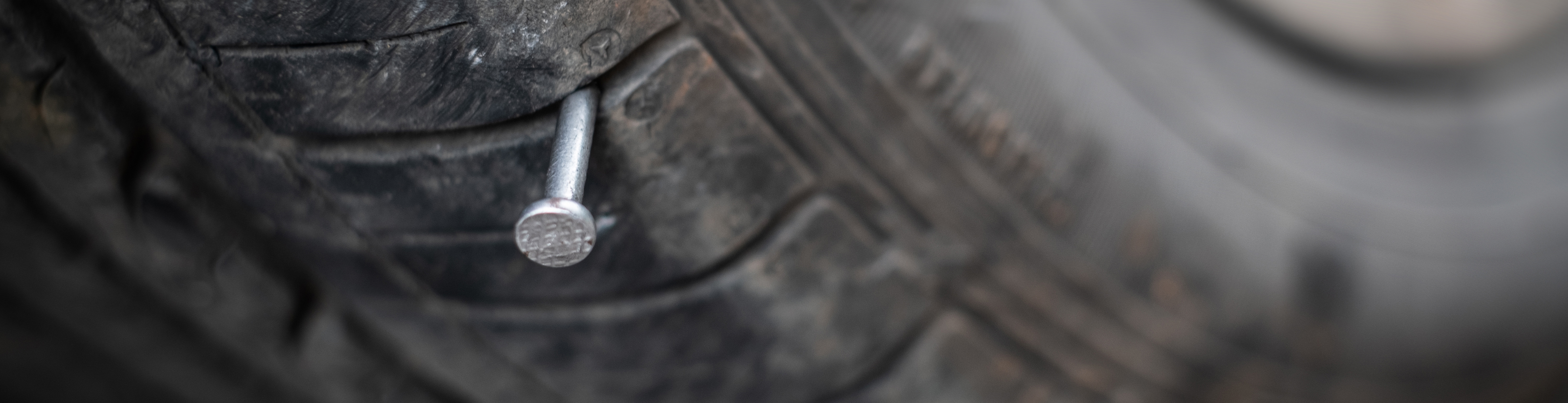
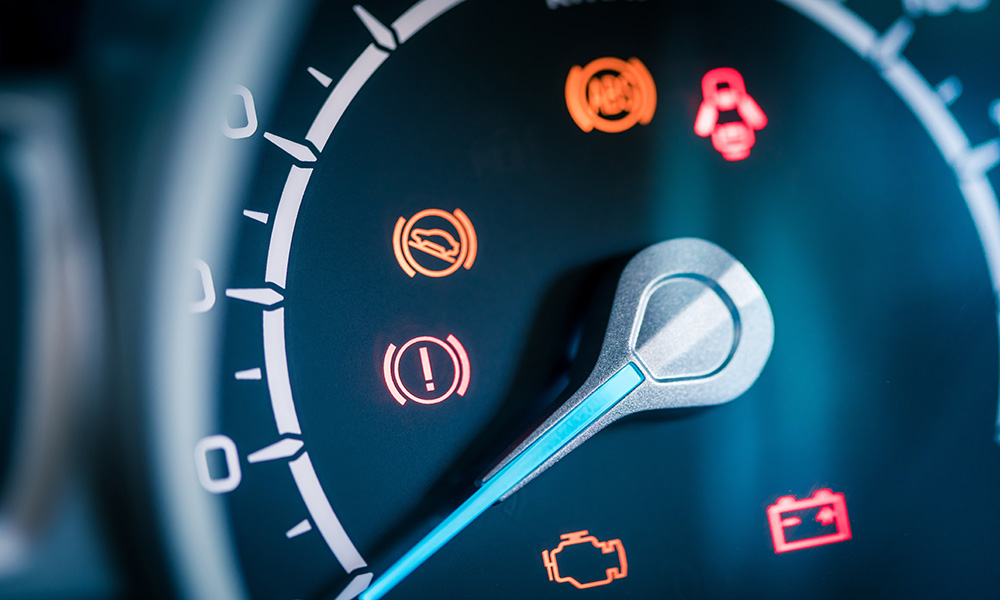
Tyre punctures are far more common than most drivers realise. A nail in the road, a damaged valve, or gradual wear can all lead to a loss of pressure, often without any immediate warning. In many cases, the first sign is a dashboard alert or a subtle change in how the car feels.
The question most drivers ask is simple: “can I keep driving?” The honest answer isn’t always a straightforward yes or no. Whether it’s safe to continue depends on several factors, including the type of puncture, how quickly the tyre is losing air, your speed, and how far you plan to travel.
In some situations, driving a short distance at low speed may be unavoidable. In others, carrying on even briefly can cause serious damage to the tyre, the wheel, and compromise your safety. Understanding the difference is key and that’s why we are here to help.
In this blog we will cover:
- Whether it’s ever safe to keep driving with a punctured tyre
- The difference between slow punctures and sudden blowouts
- Why motorway driving with low tyre pressure is especially risky
- What to do if you suspect a puncture while on the road
- When a punctured tyre can be repaired – and when it can’t
Can you drive with a punctured tyre?
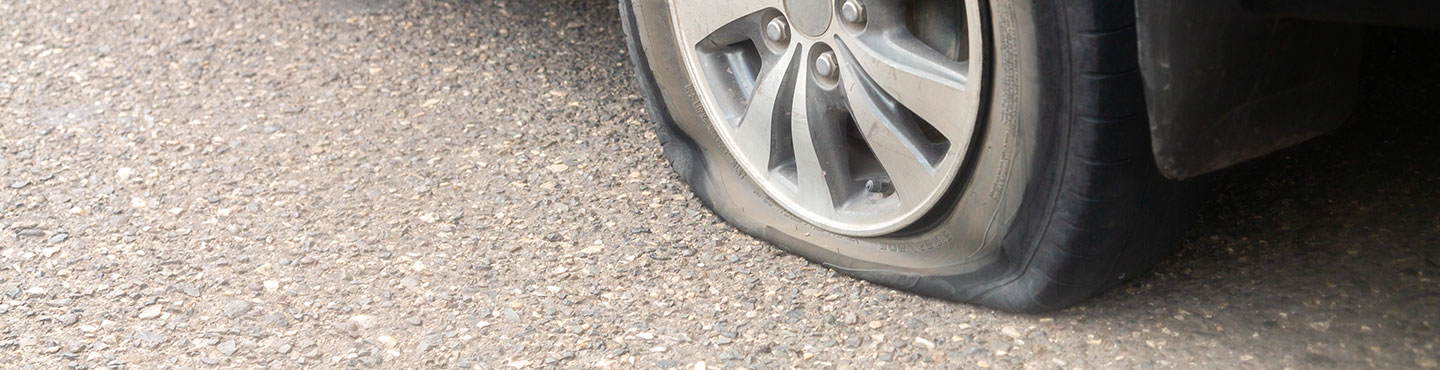
The short answer generally is no. Driving with a punctured tyre is unsafe and should be avoided wherever possible. Once a tyre loses pressure, it can no longer support the car properly, which quickly affects how the vehicle handles and stops.
Why it’s risky
A punctured tyre creates several immediate risks:
- Loss of control – reduced grip makes steering and braking far less predictable
- Tyre failure or blowout – continued driving can cause the tyre to overheat and collapse completely
- Vehicle damage – driving on low pressure can damage the wheel rim, suspension components, and even the brakes.
What might start as a minor issue can turn into a much bigger and more expensive problem in a short space of time.
Sudden punctures vs slow punctures
Sudden puncture: Air escapes quickly, steering may pull to one side, or warning lights may appear. Stop immediately.
Slow puncture: Air leaks gradually, and the car may feel fine at first. Limit driving to the shortest distance possible at low speed to reach safety.
In all cases, the safest option is to stop, assess the situation, and get the tyre checked rather than risk further damage or loss of control.
Can you drive on a motorway with a slow puncture?
Driving on a motorway with a slow puncture is unsafe. Even if the car still feels stable, motorway speeds significantly increase the risks.
At higher speeds, a tyre with reduced pressure heats up much faster. As pressure continues to drop, the tyre sidewall weakens, increasing the chance of a sudden failure or blowout. On a motorway, this can lead to rapid loss of control with very little warning.
What to do instead:
- Reduce your speed gradually and avoid harsh braking
- Keep steering smooth and controlled
- Exit the motorway at the next safe junction or services
- Use hazard lights if the car feels unstable or traffic conditions require it
- Stop immediately if the car pulls to one side, steering feels heavy, you hear flapping or thumping noises, or a tyre warning light flashes.
- Proceed cautiously only to reach safety if the puncture is slow, the car feels stable, and you are reducing speed to exit as soon as possible.
What happens if you keep driving on a punctured tyre?
Continuing to drive on a punctured tyre puts both your safety and your vehicle at risk. As pressure drops, heat builds inside the tyre, weakening the sidewall and increasing the chance of a blowout, particularly at higher speeds. Grip is reduced, stopping distances increase, and handling becomes less predictable. Over time, low tyre pressure can also damage alloy wheels or rims, suspension components, and braking systems – and the longer you keep driving, the more likely that damage is to become permanent.
How far can you drive with a punctured tyre?
The honest answer is as little as possible.
How far you can drive depends on several factors:
- The size and location of the puncture
- Whether it’s a slow leak or rapid air loss
- Vehicle weight and load
- Speed and road conditions
General guidance:
- Slow puncture: Only drive far enough to reach a safe stopping place or nearby garage, at low speed
- Flat tyre: Do not continue driving at all
Driving too far on a punctured tyre often leads to irreparable tyre damage, bent or cracked alloy wheels, increased repair or replacement costs. What might have been a simple repair can quickly turn into a much bigger bill.
What should you do if you suspect a puncture?
If you think you have a puncture:
- Pull over safely as soon as possible
- Avoid sharp steering or heavy braking
- Check the tyre visually if it’s safe to do so
Depending on your situation, you may be able to:
- Fit a spare tyre
- Use a tyre repair or inflation kit
- Call roadside assistance for recovery or repair
If you’re unsure, it’s always safer to stop and get help rather than risk further damage.
Can a punctured tyre be repaired?
Some punctures can be repaired, but not all.
A tyre can usually be fixed if the puncture is small, located in the tread area, and hasn’t been driven on while flat.
Tyres cannot be repaired if the damage is in the sidewall, if they’ve been driven with little or no air, or if there are large or multiple punctures. A professional inspection is always the best way to determine whether a repair is possible.
Conclusion: Don’t take the risk
Driving on a punctured tyre is never worth the risk. What feels like a short, manageable journey can quickly lead to loss of control, serious damage, and higher costs. If you suspect a puncture, slow down, get to safety, and have it checked as soon as possible. Acting early protects both your car and everyone else on the road.
If you need your tyres checked, let us know – we are always happy to help.